Ohio Valley “Square” Pizza
Hot, crunchy pan crust. Sauce baked in. Then—cold provolone dropped on top like a dare. Ohio Valley cold cheese pizza is the kind of regional tradition you either defend loudly or question forever.
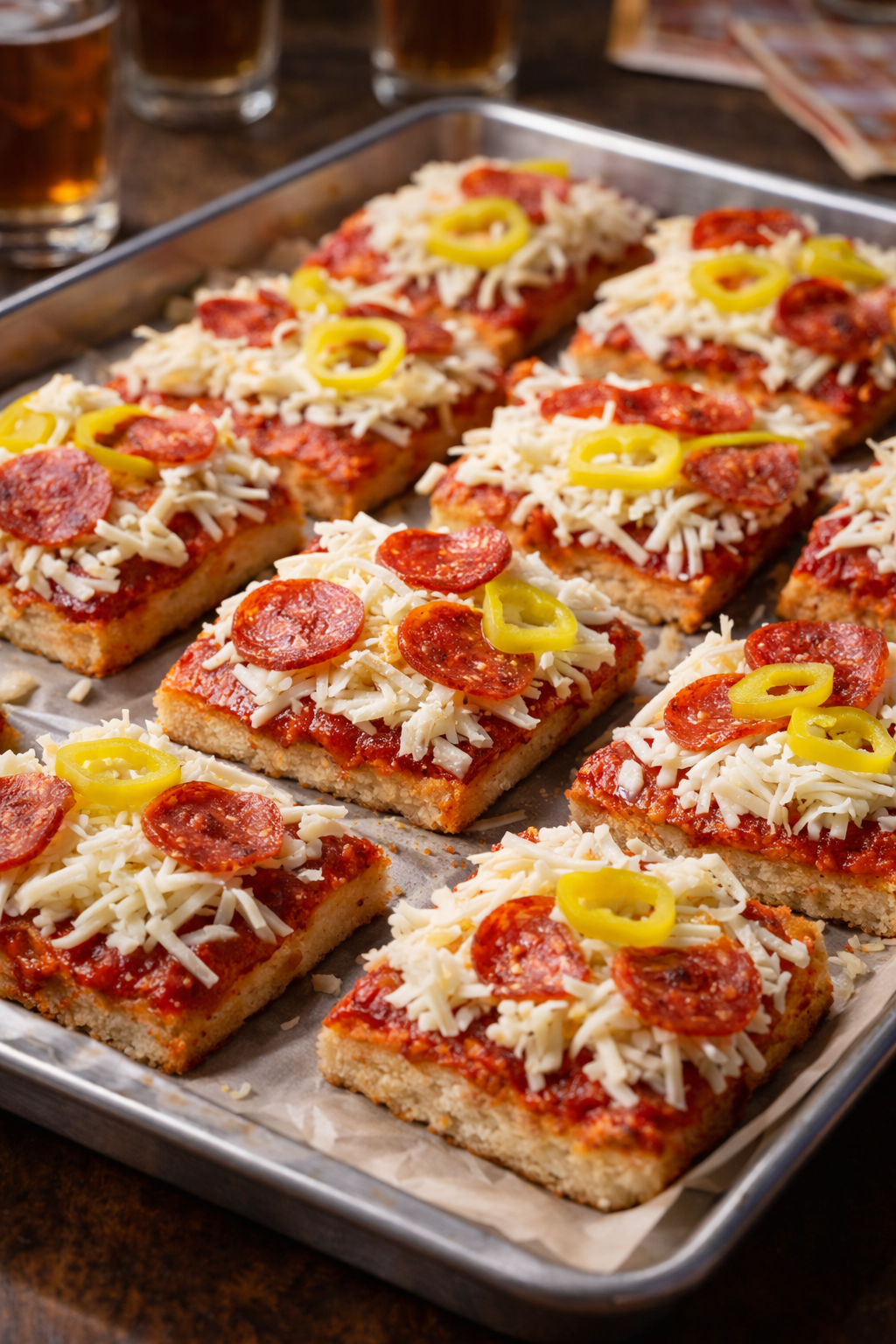
Ohio has a talent for food that feels like a conversation starter. Cincinnati has chili over spaghetti. Cleveland piles fries into a sandwich. And in the Ohio Valley—around the Steubenville area—you’ll find a pizza that breaks the most “obvious” rule: the cheese doesn’t go in the oven.
The point isn’t confusion. The point is contrast. The crust and sauce come out blazing hot and crisp. Then a blanket of cold, sharp provolone hits the surface and softens just slightly from residual heat, keeping its bite while the pizza stays hot underneath. It’s not “wrong.” It’s deliberate. And if you’ve ever had it fresh, you understand why people are loyal to it.
Section I: What Makes Ohio Valley Pizza Different?
Ohio Valley square pizza (often called “cold cheese pizza”) is defined by a few non-negotiables. If you change these, you’re making a different style—and that’s fine, but it won’t taste like the real thing.
- Pan-baked, square-cut crust: thick enough to hold sauce and toppings, crisp enough to bite clean.
- Sauce baked on: sauce goes on before baking and cooks directly on the dough, which changes the flavor and texture.
- No cheese in the oven: the cheese is added after baking, while the pizza is still hot.
- Sharp provolone (not mozzarella): provolone brings a tangy, assertive bite that works cold.
This style is local, a little polarizing, and fiercely defended. That’s usually how you know it’s real.
Section II: The “Why” Behind the Cold Cheese
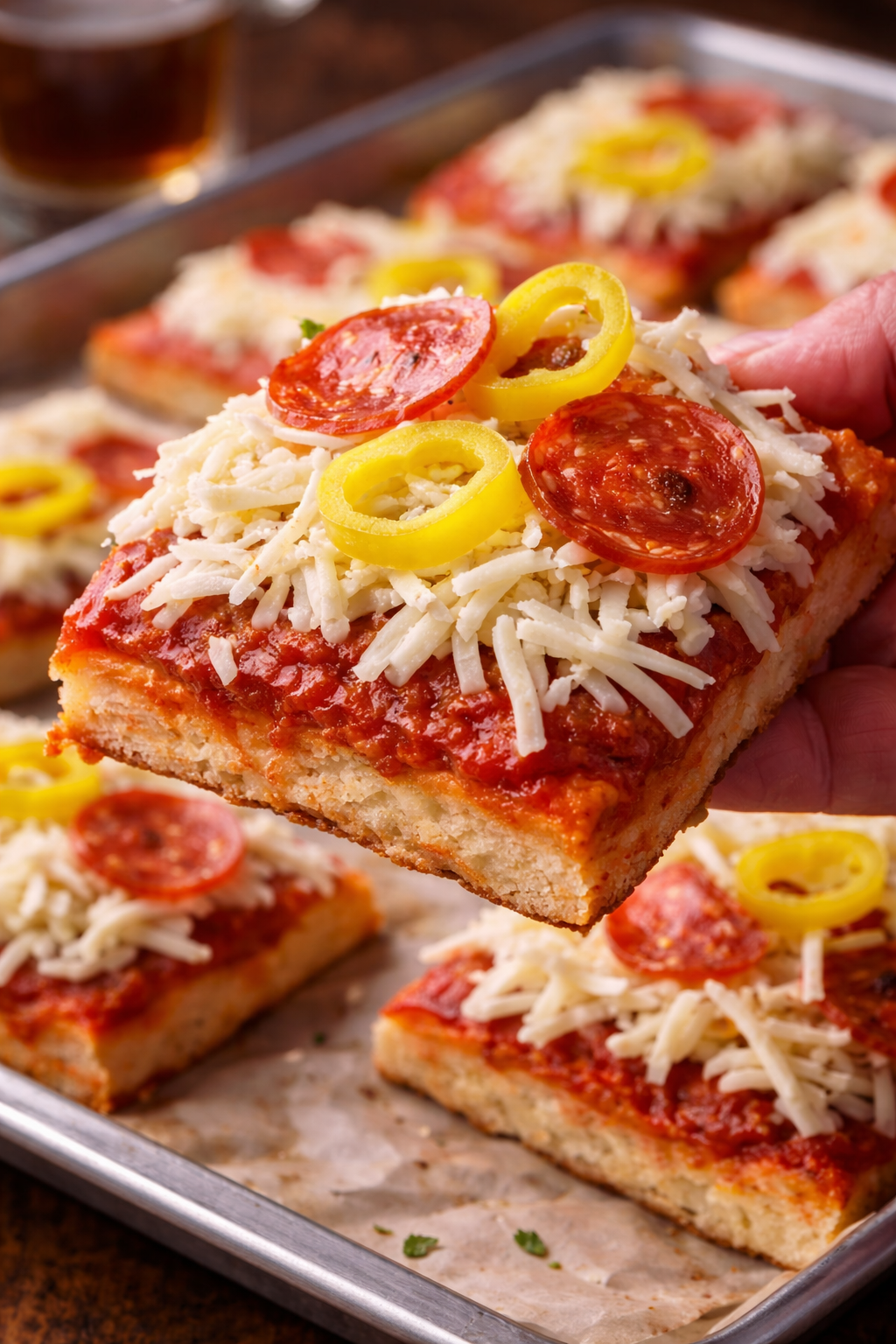
Most pizzas aim for a single temperature and texture: melted cheese, hot toppings, warm crust. Ohio Valley pizza aims for a two-level experience:
- Bottom layer: hot crust + hot sauce = crisp edge and bright tomato flavor.
- Top layer: cold provolone = sharp, salty bite that doesn’t disappear into a melted blanket.
That cheese warms just enough to soften at the edges, but it stays “cheese-forward” instead of becoming a melted coating. It’s closer to the idea of topping a hot dish with a cold finishing ingredient—like adding cold slaw to a hot sandwich. The contrast is the signature.
🛠️ The Equipment Locker
Do not use glass. Glass steams the crust. To get that signature crisp, “fried-bottom” pan bite, you need heavy-duty metal that conducts heat fast.
Section III: Ingredient Notes (So It Tastes Like the Valley)
Small choices matter more in this style because there’s nowhere to hide. With only crust + sauce in the oven, the basics have to be right.
Dough
This is a pan pizza dough: sturdy, slightly chewy, and capable of crisping on the bottom. Don’t go ultra-hydrated like artisan bread—this is about structure. The “secret” isn’t fancy flour; it’s proper kneading, a real rise, and a well-oiled pan.
Sauce (Uncooked on Purpose)
Notice the instructions: we don’t cook the sauce first. The oven does the cooking directly on the dough, keeping a bright tomato tang. Tomato paste adds body so the sauce doesn’t run watery, and oregano + garlic powder nails the classic pizzeria profile without turning it into spaghetti sauce.
Cheese
Sharp provolone is mandatory. Mild provolone can taste flat when served cold. Mozzarella melts great, but it’s not the point here. Keep the provolone cold in the fridge until the moment the pizza comes out of the oven.
Ohio Valley Square Pizza (Cold Cheese)
Sauce baked on. Cheese added cold. Square cut. No apologies.
The Roster (Ingredients)
- 3½ cups all-purpose flour
- 1¼ cups warm water (110°F)
- 2¼ tsp yeast (1 packet)
- 1 tsp sugar
- 1½ tsp salt
- 2 tbsp olive oil (plus more for the pan)
- 1 can (15 oz) crushed tomatoes
- 2 tbsp tomato paste
- 1½ tsp dried oregano
- 1 tsp garlic powder
- ½ tsp red pepper flakes (optional)
- 12–14 oz sharp provolone, shredded (kept cold)
- Pepperoni slices (optional)
- Banana peppers (optional)
The Game Plan (Step-by-Step)
- Bloom the Yeast: Pour warm water (about 110°F) into a bowl and stir in the sugar and yeast. Let it sit 5–8 minutes until foamy. If it doesn’t foam, your water was too hot/cold or the yeast is old—fix this now before wasting flour.
-
Mix and Knead the Dough:
Add flour, salt, and olive oil. Mix until shaggy, then knead 8–10 minutes until smooth and elastic.
You’re looking for dough that feels soft but not sticky. If it’s sticking hard to your hands, add a tablespoon of flour at a time (don’t dump extra flour in). -
Rise (Don’t Rush It):
Place dough in a lightly oiled bowl, cover, and let rise 60–90 minutes until doubled.
If your kitchen is cold, set the bowl near (not on) a warm oven or in a microwave with a mug of hot water next to it. - Make the Sauce (No Cooking): Stir crushed tomatoes, tomato paste, oregano, garlic powder, and optional red pepper flakes. Taste it—if your tomatoes are very acidic, a tiny pinch of sugar is fine, but keep it bright and simple.
-
Oil the Pan Like You Mean It:
This is where the “Ohio Valley crust” happens. Use a metal 9×13 pan and coat it with oil—especially corners and edges.
Oil + metal pan = crisp underside. Dry pan = soft bread. -
Press Dough Edge-to-Edge + Rest:
Press the dough into the pan. If it fights you and springs back, cover it and rest 10–15 minutes, then press again.
Make sure the dough reaches the corners so every square gets crust. -
Sauce to the Edges (No Cheese Yet):
Spread sauce evenly all the way to the edges. If using pepperoni and you want it baked into the sauce, add it now.
Important: do not add cheese before baking. That defeats the style. -
Bake Hot and Fast:
Bake at 450°F for 15–18 minutes until edges are golden and the bottom is crisp.
If your oven runs cool, you may need an extra 2 minutes. If it runs hot, check at 14 minutes. You want a baked crust—not pale bread. -
The Cold Cheese Drop (Signature Move):
Pull the pizza out and immediately cover it with cold shredded provolone.
Add banana peppers now if using.
Do not return the pizza to the oven. The cheese should soften slightly but stay distinct and sharp. - Cut and Serve Immediately: Let it sit 2 minutes, then cut into squares. Serve while the pizza is hot and the cheese is still cool—that contrast fades the longer it sits.
Serving Notes (How Locals Actually Eat It)
This pizza is best on its first lap—fresh out of the oven. If you’re serving a crowd, cut fast and get it on plates. The longer it sits, the more the cheese warms and the “cold cheese” experience becomes just “warm provolone.” Still good, but not the same.
Optional finishing move: a light shake of dried oregano over the cold cheese right after you add it gives a classic pizzeria aroma without adding extra steps.
Leftovers (The Realistic Part)
Leftover Ohio Valley pizza is still tasty, but it changes. The cheese will melt when reheated, and that’s normal for day-two.
- Best reheat: skillet on medium to crisp the bottom, then cover briefly to warm through.
- Oven option: hot oven on a sheet pan until the bottom firms up again.
- Pro move: add a small handful of fresh cold provolone after reheating to bring back the signature feel.
Pro-Tips & Audibles
Pro-Tip (The “Bottom Crust” Rule)
Oil the pan generously and use metal. That’s the difference between “pan pizza” and Ohio Valley square pizza with the crisp underside people remember.
Also: keep the provolone cold until the last second. Warm cheese loses the whole contrast.
The Buckeye Audible (First-Timer Bridge)
If you’re serving people who might panic at the cold-cheese concept, do a “bridge version”: dust a small handful of mozzarella on the sauce before baking (lightly), then finish with the full cold provolone blanket after it comes out. It keeps the style intact while making it feel less shocking for newcomers.
Common Mistakes (Penalties 🚩)
- Putting provolone in the oven (turns it into normal pizza).
- Using glass bakeware (steams the crust and kills the crisp).
- Using mild provolone or mozzarella only (flavor falls flat cold).
- Waiting too long to serve (contrast fades fast).
- Not pressing dough into corners (uneven squares, weak edges).
Final Whistle
Ohio Valley cold cheese pizza is a regional classic for a reason: it’s simple, distinctive, and unforgettable the first time you eat it hot. Bake the sauce on, keep the provolone cold, cut it into squares, and serve it fast. Then enjoy the best part—watching someone take their first bite and immediately ask, “Wait… why is this actually good?”
Frequently Asked Questions
Why do you put the cheese on cold?
Because that temperature contrast is the signature of Ohio Valley style. The hot crust and sauce warm the cheese slightly, but it stays sharp and distinct instead of melting into a blanket.
What kind of cheese is correct for this pizza?
Sharp provolone is the classic choice. Mild provolone can taste bland when cold, and mozzarella isn’t the traditional flavor for the cold-finish style.
What pan should I use?
Use a heavy metal 9×13 pan. Glass tends to steam the dough instead of crisping it, which misses the signature bottom crust.
How do I reheat leftovers?
Reheat in a skillet to crisp the bottom. If you want to bring back the “cold cheese” effect, add a small handful of cold shredded provolone after reheating.