

The Official Guide to Cincinnati Chili
History, Technique, Authentic Flavor & Game-Day Execution
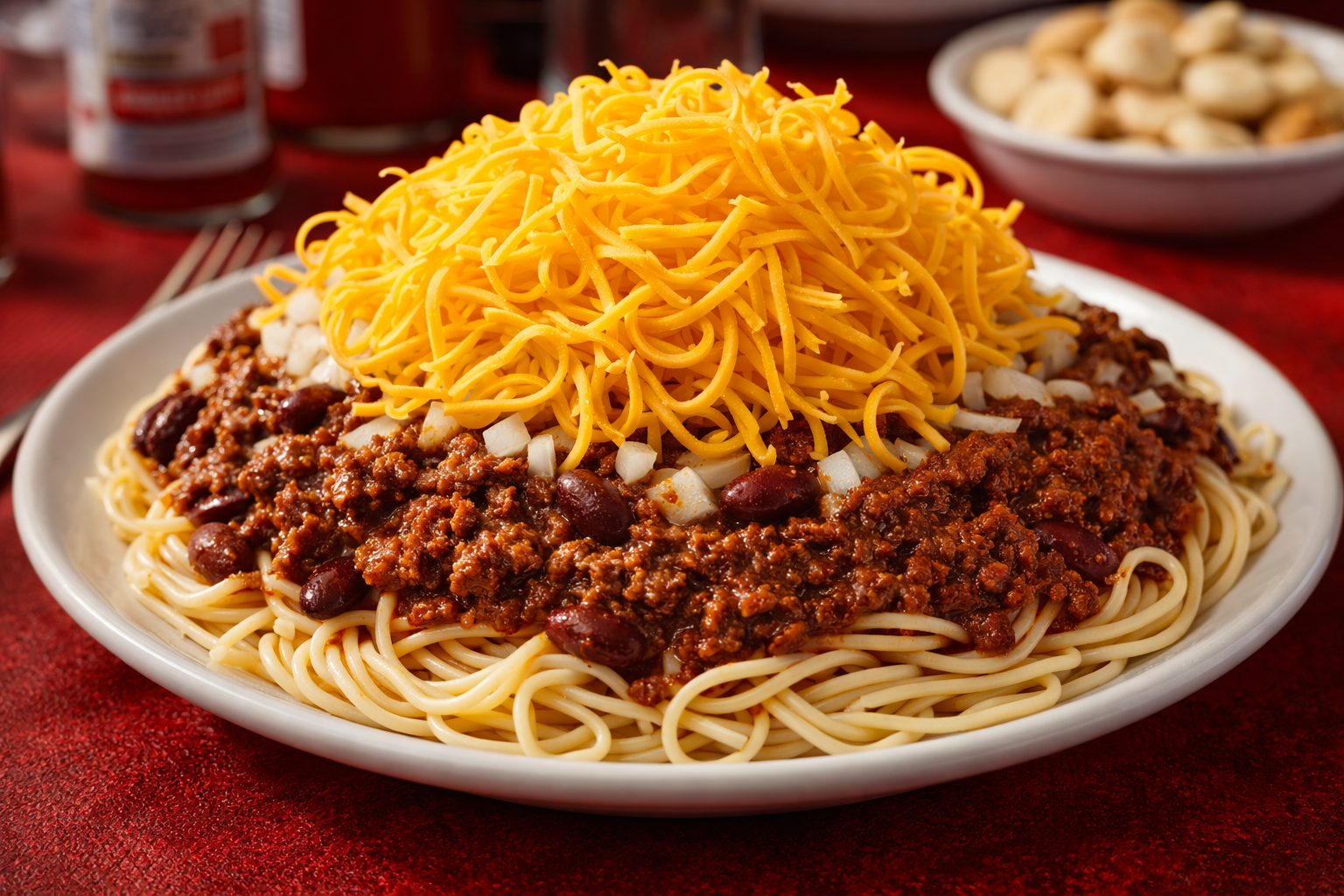
In Ohio, chili isn’t just something you eat—it’s something you argue about, defend at tailgates, and proudly introduce to out-of-staters with a grin that says, “Just wait.” Nowhere is that truer than in Cincinnati, where chili is thinner, spiced like the Old World, and served over spaghetti instead of in a bowl.
This isn’t Texas chili. It’s not Midwest beef stew. And it’s definitely not trying to be. Cincinnati Chili is a Mediterranean-influenced meat sauce, built for layering, sharing, and feeding crowds—exactly why it’s become a game-day staple across the Buckeye State.
Section I: A Brief History (No Huddles Skipped)
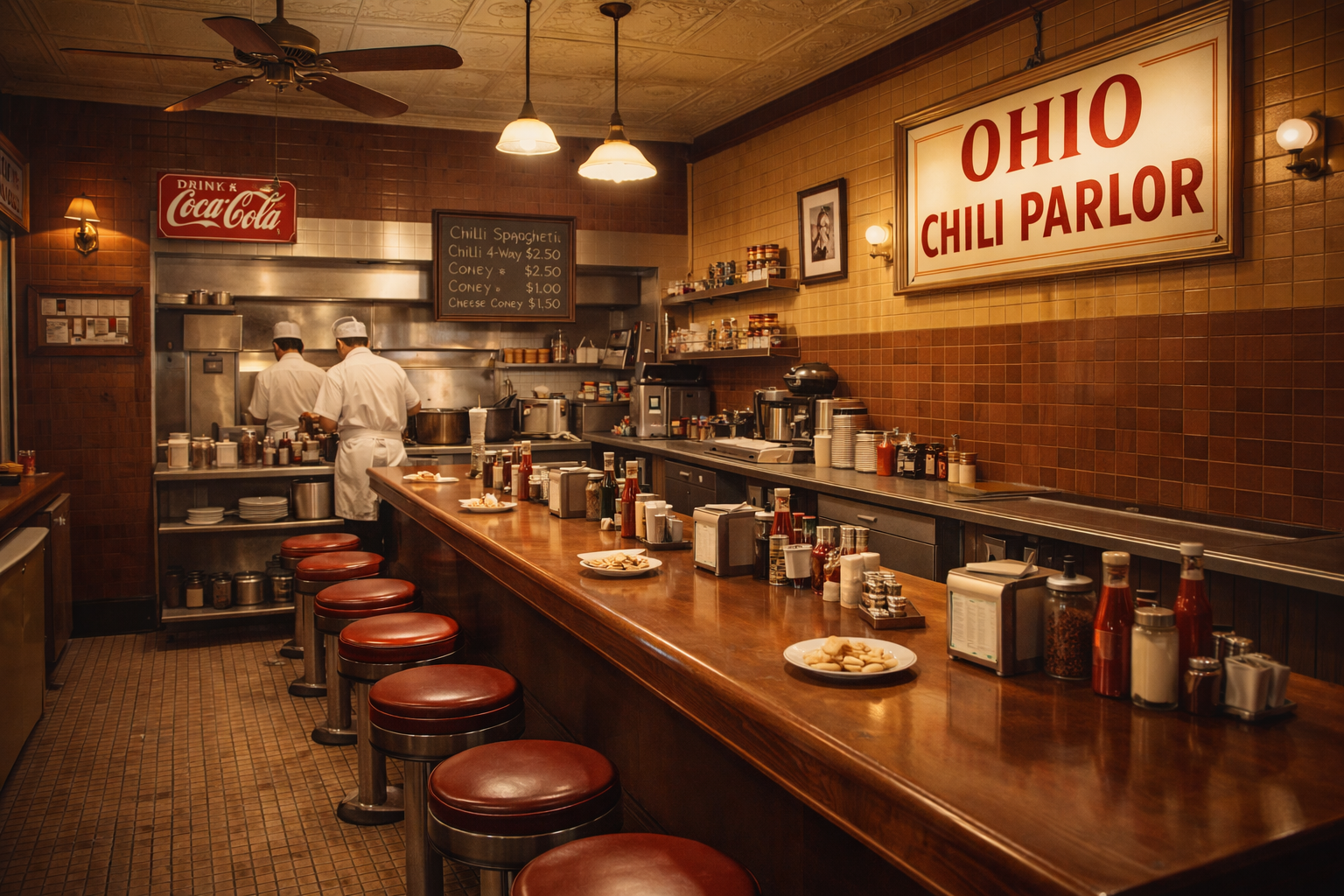
Cincinnati Chili traces its roots to Greek and Macedonian immigrants who arrived in Ohio in the early 20th century. Looking to appeal to American tastes while still using familiar Old World flavors, they adapted a kima-style spiced meat sauce—traditionally served over rice or bread—into something heartier.
Instead of dumping everything into a single bowl, they thinned the sauce, added warming spices like cinnamon and allspice, removed the beans (making them a topping), and served it all over spaghetti.
That “why” matters, because it explains the biggest rookie mistake: trying to cook Cincinnati chili like a thick, chunky pot of chili. Authentic versions behave more like a sauce. You’re building something designed to pour, coat noodles, and stack under cheese without turning into soup or paste.
Section II: The Spice Profile
This is the “Audible” most outsiders miss. If you remember one thing: It is not spicy—it is spiced.
The Philosophy
Instead of heat-forward chilies, we lean into aromatic warmth. This allows the sauce to complement the cheese rather than fighting it. The goal is a steady, layered flavor that tastes richer with every bite—even when it’s piled high with cheddar and onions.
In practical terms: cinnamon shouldn’t scream “dessert,” cocoa shouldn’t taste like chocolate, and cloves should never dominate. When it’s right, you taste beef, gentle tomato, and a warm finish that feels familiar even if you can’t immediately name the spices.
- Cinnamon: Warmth, not sweetness.
- Allspice: Depth and roundness.
- Cocoa Powder: Bitterness and color.
- Bay Leaf: Structure.
What “Warm” Actually Means
Warm spices don’t add heat; they add aroma. They rise when the sauce is hot, mellow as it cools, and come back alive when reheated. That’s one reason Cincinnati chili is famous for tasting even better the next day: the flavors continue to knit together after the simmer is done.
Section III: The “Way” System
Cincinnati Chili isn’t ordered by size. It’s ordered by layers. The cheese is always finely shredded—almost fluffy—so it melts gently without disappearing. The “Way” system isn’t gimmicky. It’s a practical structure that keeps the sauce from getting lost and turns a simple pot of chili into a build-your-own spread for a crowd.
Spaghetti + Chili
Spaghetti + Chili + Cheese
Add Onions OR Beans
The Works (All of the above)
If you’re serving a group, set up a “Way Bar”: spaghetti on one end, chili in a warm pot or slow cooker, and bowls of cheese, onions, and beans lined up like toppings at a stadium concession stand. It’s simple, fast, and everybody gets to build what they like without turning dinner into a debate.
🛠️ The Equipment Locker
You can’t play the game without the right gear. To get the authentic texture, you have to break the beef down into a fine slurry. A fork works, but it takes patience. The tool below makes the “no chunks” rule much easier to follow.
Authentic Cincinnati Chili
The exact slow-simmered texture Ohio fans grew up eating.
The Roster (Ingredients)
- 2 lb ground beef (80/20)
- 4 cups water
- 1 small onion, grated
- 6 oz tomato paste
- 2 tbsp apple cider vinegar
- 1 tbsp Worcestershire
- 2 tsp cinnamon
- 1½ tsp allspice
- ½ tsp ground cloves
- 1 tbsp cocoa powder (unsweetened)
- 2 tsp paprika
- 1 tsp garlic powder
- 1 tsp salt
- 1 bay leaf
Why These Ingredients Matter
Cincinnati chili succeeds because of balance. Every ingredient has a specific role, and removing or substituting the wrong one changes the entire character of the dish. This isn’t “throw it all in and hope.” It’s a simple formula that works because each piece supports the next.
Ground beef (80/20) provides richness and body. Lean meat can produce a dry, grainy texture, while 80/20 melts into the water and helps create the signature smooth sauce. Don’t worry about the fat early on—most of it will integrate during the simmer, and you can skim later if you want it lighter.
Water is not a shortcut—it’s the base. Starting the beef in cold water prevents clumps and gives you that authentic “fine” texture Cincinnati chili is known for. This is the step that makes it feel like a sauce instead of crumbled taco meat.
Grated onion dissolves into the pot as it cooks, adding sweetness and aroma without leaving chunks. If you only have diced onion, you can use it, but the finished chili won’t be as classic.
Tomato paste provides color, umami, and a concentrated tomato foundation without watering the sauce down. This recipe keeps the tomato subtle on purpose; Cincinnati chili is beef-and-spice forward.
Apple cider vinegar brightens the sauce. That small tang keeps the chili from tasting heavy, especially once it hits spaghetti and cheese.
Worcestershire adds savory depth. It’s one of the easiest ways to make the pot taste like it simmered in a chili parlor kitchen instead of a home stove.
Cinnamon, allspice, and cloves form the classic triad—warm, fragrant, and slightly floral. Used correctly, they create a signature finish without tasting like holiday dessert.
Unsweetened cocoa powder deepens flavor and darkens color. It’s not here to add sweetness; it’s here to add bitterness and complexity, like a tiny “shadow” behind the spice.
Bay leaf acts like a backbone during the simmer, holding the flavor structure together while everything melds.
Understanding the Texture (Thin, Not Watery)
Authentic Cincinnati chili is meant to pour. It should flow easily off a spoon, but still look cohesive—like a smooth meat sauce. The easiest way to evaluate it is at serving time: when ladled over spaghetti, it should coat the noodles and settle into the spaces, not sit on top like a thick chili paste.
If it gets too thick, add a splash of water and simmer for a few minutes. If it looks greasy, stir more vigorously during the simmer to help the fat re-emulsify into the sauce. You can also skim a little fat off the top near the end, but don’t strip it completely—some richness is part of the identity.
The Game Plan
-
Cold Start the Beef (The Signature Move):
Place the raw ground beef in a large pot and pour in the water. Before you even turn on the heat, break the beef apart with a fork or meat chopper until it looks like loose, tiny bits floating in the water.
What you’re aiming for: no big chunks. The mixture should look a little cloudy, almost like a loose slurry. This step is why Cincinnati chili ends up silky instead of crumbly. -
Bring Up the Heat Slowly:
Set the pot over medium heat and stir frequently as it warms. As the beef begins to turn from pink to gray, keep breaking it up. If you let it sit, it will form meatballs and clumps.
Important: do not brown the meat like taco meat. Browning creates chewy chunks and changes the final texture. Cincinnati chili is built on dispersion, not searing. -
Build the Sauce Base:
Stir in the grated onion, tomato paste, vinegar, and Worcestershire sauce. Add the cinnamon, allspice, cloves, cocoa, paprika, garlic powder, salt, and the bay leaf.
Mix thoroughly so the tomato paste dissolves and the spices distribute evenly. This is where the pot starts to smell “right.” If the spices are clumping, stir a bit more—tomato paste can trap dry pockets if rushed. -
Low & Slow Simmer (Where It Becomes Cincinnati):
Reduce heat so the chili simmers gently, uncovered, for about 2 hours. Stir every 15–20 minutes, scraping the bottom so nothing sticks.
As it simmers, you’ll notice the texture getting smoother and the flavor getting rounder. The goal is not to boil it hard; a gentle simmer gives you a clean, cohesive sauce.
Quick checks during the simmer: If it’s bubbling aggressively, lower the heat. If it’s thickening too fast, add a splash of water. If you see fat pooling heavily on top, stir to incorporate and let it continue to reduce naturally. -
Final Whistle (Taste, Adjust, Serve):
Remove the bay leaf. Taste the chili and adjust if needed: a pinch more salt can wake it up; a tiny splash of vinegar can brighten it if it tastes flat.
Serve over hot spaghetti and top immediately with a generous mound of finely shredded cheddar. The heat of the sauce will soften the cheese, but it should still look like a fluffy pile—not fully melted into a sauce.
How to Serve It Like a Chili Parlor
Start with spaghetti. Use regular spaghetti and cook it just until tender. Drain well so water doesn’t dilute the chili on the plate.
Ladle the chili. Aim for coverage, not drowning. Cincinnati chili is flavorful; you don’t need a lake of it.
Cheese goes on last. Use finely shredded mild cheddar for the classic result. Sharp cheddar can overpower the warm spices, and thick-cut shreds don’t melt as nicely.
Optional toppings: finely diced onion, kidney beans, oyster crackers, and hot sauce at the table (so people can add heat without changing the base profile).
Make-Ahead, Storage, and Reheating
This chili is a game-day cheat code because it holds beautifully. In fact, many Cincinnati chili fans prefer it after a rest, because the spice profile becomes more unified.
Refrigerator: Cool completely, then store in airtight containers for up to 5 days.
Freezer: Freeze in flat bags or containers for up to 6 months. Label with the date, and thaw overnight in the refrigerator for best texture.
Reheating: Warm gently on the stovetop over medium-low heat, stirring often. Add a splash of water if it thickened in storage. Avoid blasting it on high heat, which can separate the fat and make the sauce look oily.
Crowd & Tailgate Notes
If you’re feeding a group, keep the chili warm in a slow cooker on LOW once it’s finished. Don’t cook it in the slow cooker from raw—Cincinnati chili needs the early stirring stage to avoid clumps.
For a fast “Way Bar,” pre-cook spaghetti and toss it with a tiny drizzle of oil so it doesn’t clump. Then set toppings in bowls and let people build their own.
Section VI: Common Mistakes (Red Flags 🚩)
- Browning the beef first (Creates tough chunks and breaks the classic texture).
- Adding cumin or chipotle (Wrong flavor profile—turns it into “regular chili”).
- Making it thick like stew (Cincinnati chili should pour like a sauce).
- Using sharp cheddar (Overpowers the warm spice finish).
- Boiling hard for two hours (Can reduce too fast and separate fat; keep it at a gentle simmer).
Section VII: The Buckeye Audible
Smoked Variation: Lightly smoke the raw ground beef for 15 minutes over applewood before adding to the pot. This adds subtle depth without overpowering the spice profile—perfect for outdoor fall Saturdays.
Extra-Depth Variation (Still Authentic): If you want a slightly richer parlor-style taste, let the chili rest overnight in the fridge, then reheat slowly the next day. The spice profile becomes smoother and more “together,” which is exactly what people mean when they say Cincinnati chili is better as leftovers.
Ready for the next play? Check out the Full Ohio Gameday Menu.
Frequently Asked Questions
Why is the chili so thin?
Authentic Cincinnati chili is a meat sauce (condiment), not a stew. It is designed to coat spaghetti noodles, not to be eaten with a spoon like Texas chili. The “thin” texture is what makes the Way system work—spaghetti, sauce, cheese, and toppings stay layered instead of turning into one thick mass.
Is there really chocolate in it?
Yes—unsweetened cocoa powder is a standard ingredient. It adds depth, color, and a faint bitterness that rounds the spice profile. It does not make the chili taste sweet or “chocolatey.”
Can I freeze leftovers?
Absolutely. This chili freezes extremely well. Store in airtight containers for up to 6 months. For best results, thaw overnight in the refrigerator and reheat slowly on the stovetop with a splash of water if needed.
How long does Cincinnati chili keep?
Stored in an airtight container in the refrigerator, this chili keeps for up to 5 days. The flavors often deepen after resting, which is why many fans love it on day two.
What is the best way to reheat it?
Reheat gently on the stovetop over medium-low heat, stirring often. If it thickened in the fridge, add a splash of water to restore the classic pourable consistency. Avoid high heat, which can separate the fat.
Can I double or triple this recipe?
Yes. Cincinnati chili scales well for crowds. Use a larger pot and stir a bit more during the early heating stage to prevent clumps. You may also need a slightly longer simmer to let the flavor fully develop in a bigger batch.