

City Chicken (Ohio Style)
City Chicken is the Rust Belt’s most lovable fake-out: pork on a stick, breaded and fried to look like a chicken drumstick. It’s not trying to fool anyone anymore—it’s trying to taste like somebody’s grandma made Sunday dinner in a small kitchen with a cast-iron skillet and a tight grocery budget.
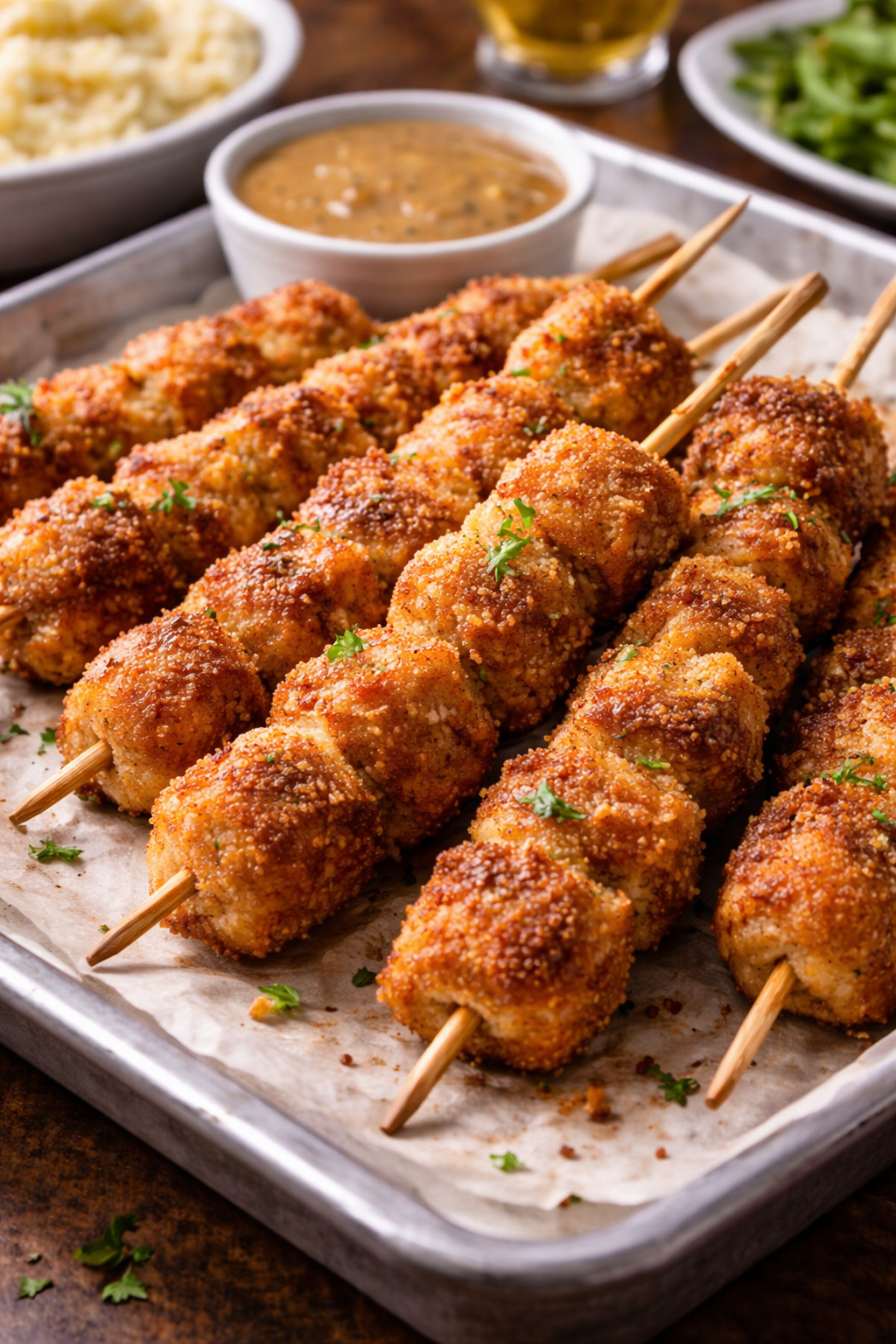
If you didn’t grow up around Northeast Ohio, the name sounds like a joke. And it kind of is—just a practical, blue-collar joke that stuck around for over a century. City Chicken is made from cubed pork (sometimes veal in older butcher-shop versions), packed onto a short skewer, breaded, and fried until it looks like a golden drumstick with a handle.
It’s the kind of dish that belongs to a specific kind of table: mashed potatoes, gravy, green beans, maybe applesauce, and somebody saying, “These are hot—don’t burn your mouth.” It’s humble and deeply regional, which is why it still matters. Food like this is history you can eat.
Section I: What City Chicken Actually Is (And Why Ohio Loves It)
City Chicken is an Ohio and Great Lakes classic that shows up everywhere immigrant communities and industrial cities shaped the local food culture. The concept is simple:
- Meat: Cubed pork (loin for lean, shoulder for juicier) packed tightly.
- Shape: Short skewers create the “drumstick” illusion—handle included.
- Coating: Flour → egg → breadcrumbs for a crisp crust.
- Method: Fry for color, then finish gently in the oven for tenderness.
It exists because it made sense. Pork was accessible. Chicken was less so. And once the butcher shops started selling pre-skewered “city chicken,” it became a Sunday-dinner staple that people kept making long after the original reasons faded.
Section II: The Two Schools of City Chicken (Lean vs. Juicy)
There are two legit approaches, and which one you choose depends on what you want the inside to be like.
- Pork Loin: Cleaner flavor, more “meat-forward,” less fatty. Great if you’re serving with gravy because the gravy brings richness.
- Pork Shoulder: More forgiving, stays juicy, slightly richer. Great if you want it tender even without a sauce.
Buckeye Playbook call: If you’re making this as a “top recipe” centerpiece, use pork shoulder (or do a 50/50 mix). Lean loin is great, but shoulder gives you that “how is this so tender?” moment that people remember.
Section III: The Equipment Locker (What Makes This Work)
🛠️ The Equipment Locker
City Chicken is skillet food. Long kebab skewers are annoying and unsafe in a shallow pan. Use the short, thicker skewers that create a sturdy “handle” and actually fit.
One more “equipment truth”: a heavy skillet matters. Thin pans drop temperature when the meat hits, and that’s how you get greasy breading instead of crisp breading. Cast iron is perfect; a heavy stainless skillet also works.
Section IV: The Playbook Recipe (Classic Skillet + Oven Finish)
City Chicken (The Classic Method)
Serves 4–6 (makes about 8–10 skewers)
The Roster
- 2 lb pork loin or shoulder (1½-inch cubes)
- 8–10 short wooden skewers (soaked 30 mins)
- 1½ cups all-purpose flour
- 2 large eggs, beaten
- 2 cups seasoned breadcrumbs
- 1½ tsp kosher salt
- 1 tsp black pepper
- 1 tsp paprika
- ½ tsp garlic powder
- Neutral oil for frying
- Optional: 1 tbsp Dijon mustard (egg wash)
Before You Start (The 3 Non-Negotiables)
- Soak skewers: 30 minutes in water prevents scorching.
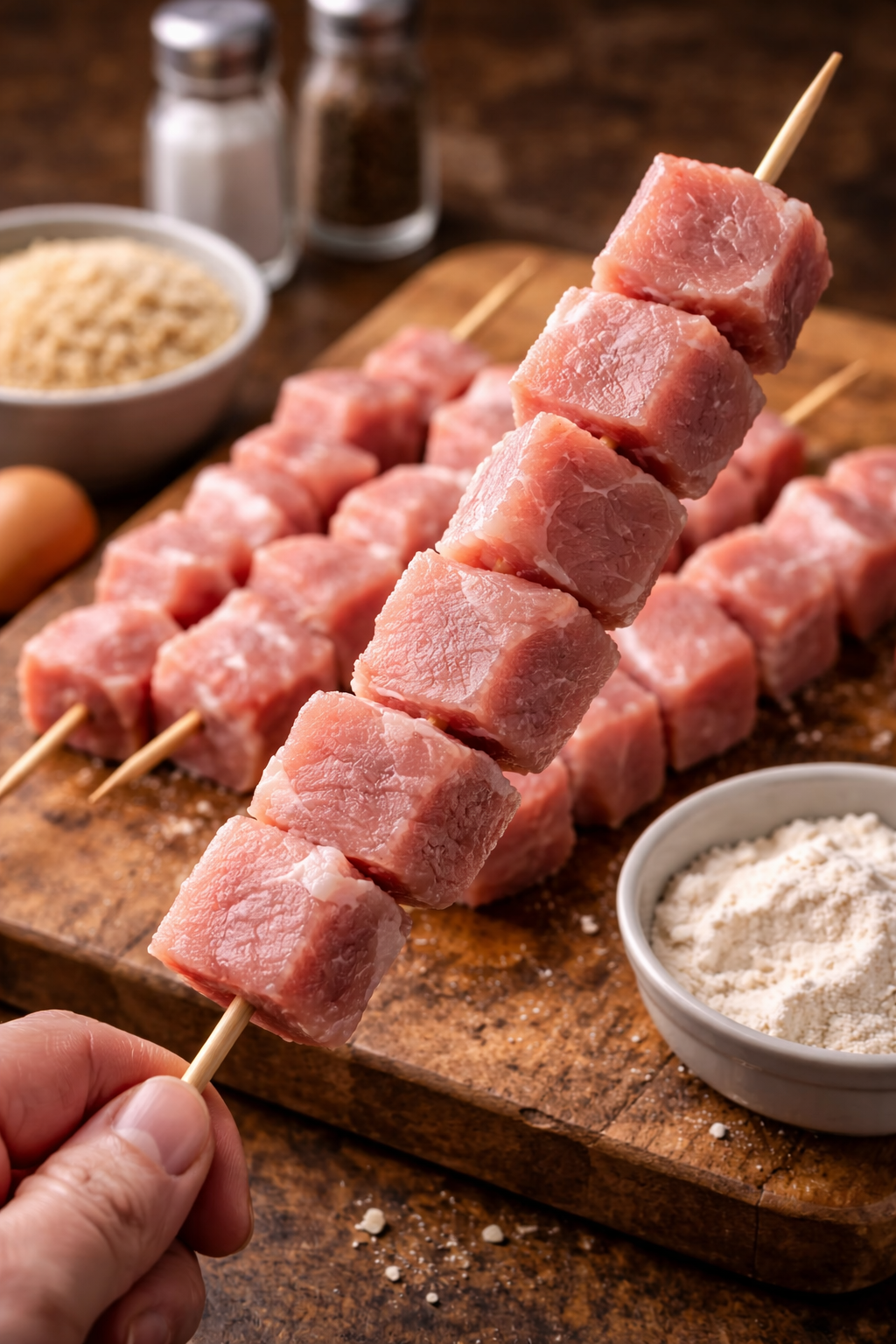
- Pack the cubes tight: gaps = dry meat and uneven cooking.
- Fry for color, oven for tenderness: this is the entire secret.
The Game Plan (Step-by-Step)
- Preheat the Oven: Set oven to 350°F. Line a baking sheet with foil and set a rack on top if you have one (keeps the crust crisp).
- Build the “Drumsticks”: Thread pork cubes tightly onto each skewer. Leave about 1–2 inches of stick exposed as the handle.
- Set Up Breading Station:
Bowl 1: flour + salt + pepper + paprika + garlic powder
Bowl 2: beaten eggs (add Dijon if using)
Bowl 3: breadcrumbs - Bread Like It Matters: Dredge in flour → egg → breadcrumbs. Press gently so the crumbs bond. Let the breaded skewers rest 5 minutes (helps coating set).
- Heat the Oil Correctly: Add about ½ inch of oil to a heavy skillet. Heat to 350°F. If you don’t have a thermometer: drop in a breadcrumb—if it sizzles immediately and steadily, you’re close.
- Fry for Golden Color: Fry in batches so you don’t crowd the pan. Turn carefully every couple minutes until deeply golden all around, about 10–12 minutes total per skewer batch.
- Finish in the Oven: Move browned skewers to the baking sheet. Bake 10–15 minutes until pork is tender and cooked through.
- Rest and Serve: Rest 5 minutes. Serve with gravy, mashed potatoes, and something green so your plate looks like Sunday.
Doneness Notes (So You Don’t Overthink It)
Pork loin can dry out if you push it too far. That’s why the oven finish is gentle. If you’re using shoulder, it’s more forgiving. Either way, the goal is “tender with a crisp crust,” not “fried until tough.”
Section V: How Ohio Actually Serves City Chicken
City Chicken isn’t tailgate food—it’s “somebody cooked” food. The classic Ohio plate usually looks like this:
- Mashed potatoes + gravy: the breading begs for it.
- Green beans or peas: buttered, simple, no drama.
- Applesauce: the sweet counter to the savory pork is old-school and correct.
- White bread: optional, but somehow always there.
Gravy tip: If you’re not making homemade gravy, a jar works fine—just warm it and add a crack of black pepper. This dish isn’t trying to be fancy; it’s trying to be satisfying.

Audibles & Modern Options
The Buckeye Audible: Oven-Only City Chicken
If you don’t want to fry, you can still get a good result.
How: Place breaded skewers on a wire rack over a sheet pan. Spray generously with oil. Bake at 425°F for 18–25 minutes, flipping once, until browned and cooked through.
Reality check: It won’t taste exactly like the skillet version, but it’s cleaner, faster, and still hits the nostalgia notes.
The “Butcher Shop” Twist (Very Ohio)
Some old-school versions use a veal + pork mix. If you can find veal stew meat, do a 50/50 blend. It’s tender, mild, and feels like a throwback in the best way.
Common Mistakes (Penalties 🚩)
- Loose skewering: gaps between cubes dry out and cook unevenly. Pack tight.
- Oil too hot: burned crust, raw inside. Stay near 350°F.
- Oil too cold: greasy coating. Let oil recover between batches.
- Skipping the oven finish: frying alone can leave the center underdone or the crust overdone.
- Using long skewers: they don’t fit the pan and make flipping dangerous. Short skewers win.
Final Whistle
City Chicken is a reminder that Ohio cooking has always been practical, inventive, and quietly proud. It’s not a trend. It’s a tradition—one built from tight budgets, neighborhood butcher shops, and families figuring out how to make a meal feel special. Make it once and you’ll understand why Cleveland and Youngstown still claim it.
Frequently Asked Questions
Is there chicken in City Chicken?
No—City Chicken is traditionally pork (and sometimes veal). The “chicken” part is the shape and the breaded drumstick look.
Can I make City Chicken in the oven only?
Yes. Bake at 425°F on a rack, spraying the breading with oil for browning. It’s a solid modern alternative, but the skillet method is the classic.
Why did my breading fall off?
Usually it’s because the coating didn’t set. Press crumbs firmly, let breaded skewers rest 5 minutes before frying, and avoid moving them too much early in the fry.
How do I prevent wooden sticks from burning?
Soak skewers in water for at least 30 minutes. Also keep the exposed handle out of the oil as much as possible while frying.