Lake Erie Yellow Perch
In Northern Ohio, the Friday fish fry isn’t a trend—it’s a tradition with its own rhythm. Yellow perch is the headliner: sweet, mild, and delicate enough that a heavy batter would be disrespectful. The best perch fry is simple on purpose: a thin cracker-meal crust, hot oil, quick cook, and a plate that doesn’t last long.
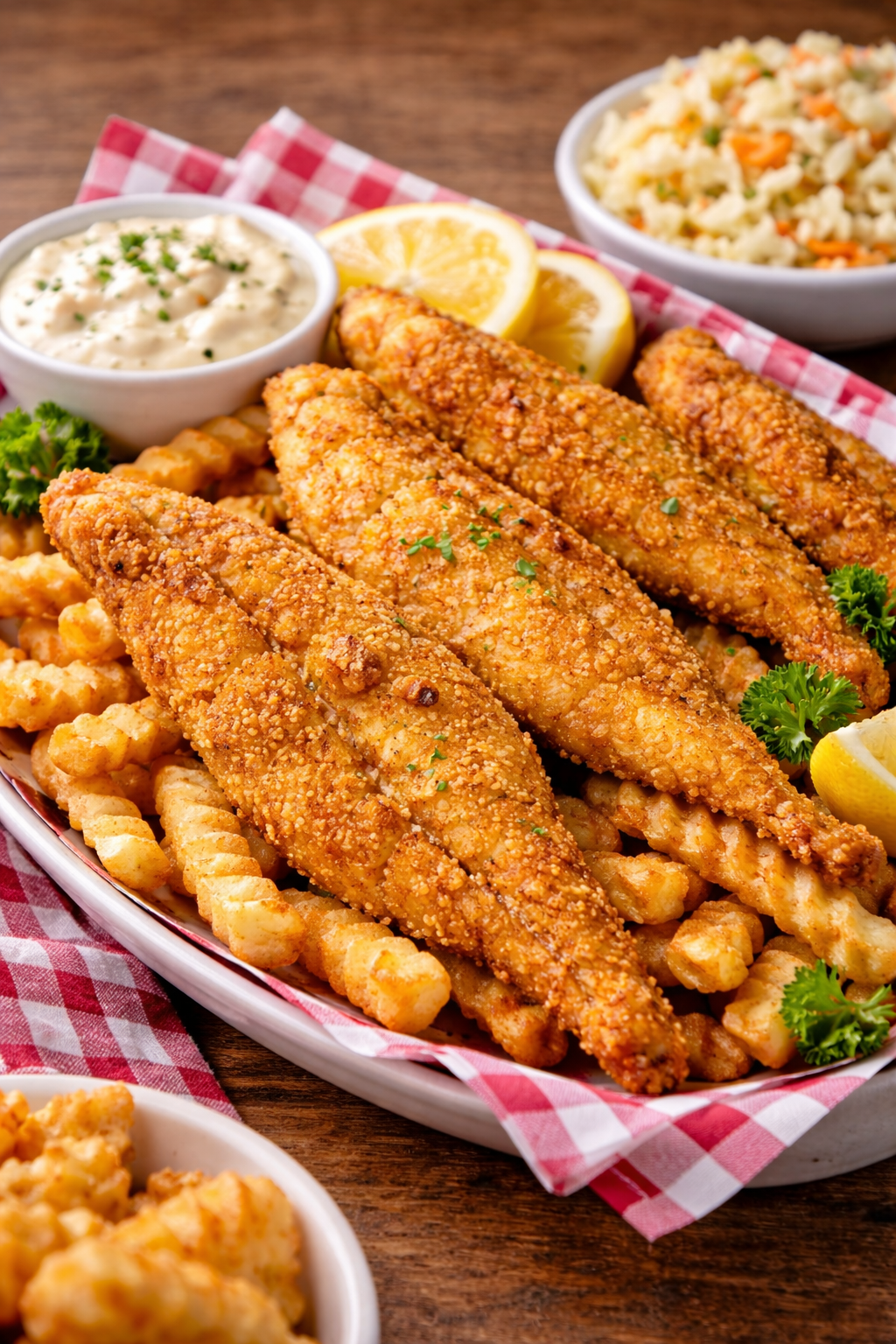
Perch is one of those foods that tells you immediately whether the cook knows what they’re doing. Done right, it’s crisp, light, and tender—no grease, no sog, no “fishy” smell taking over the kitchen. Done wrong, it turns into overcooked curls with wet breading that slides off like a raincoat. The fix is not secret seasoning. The fix is process: dry fish, fine crumbs, proper temperature, and a rack.
What Makes Lake Erie Perch Special?
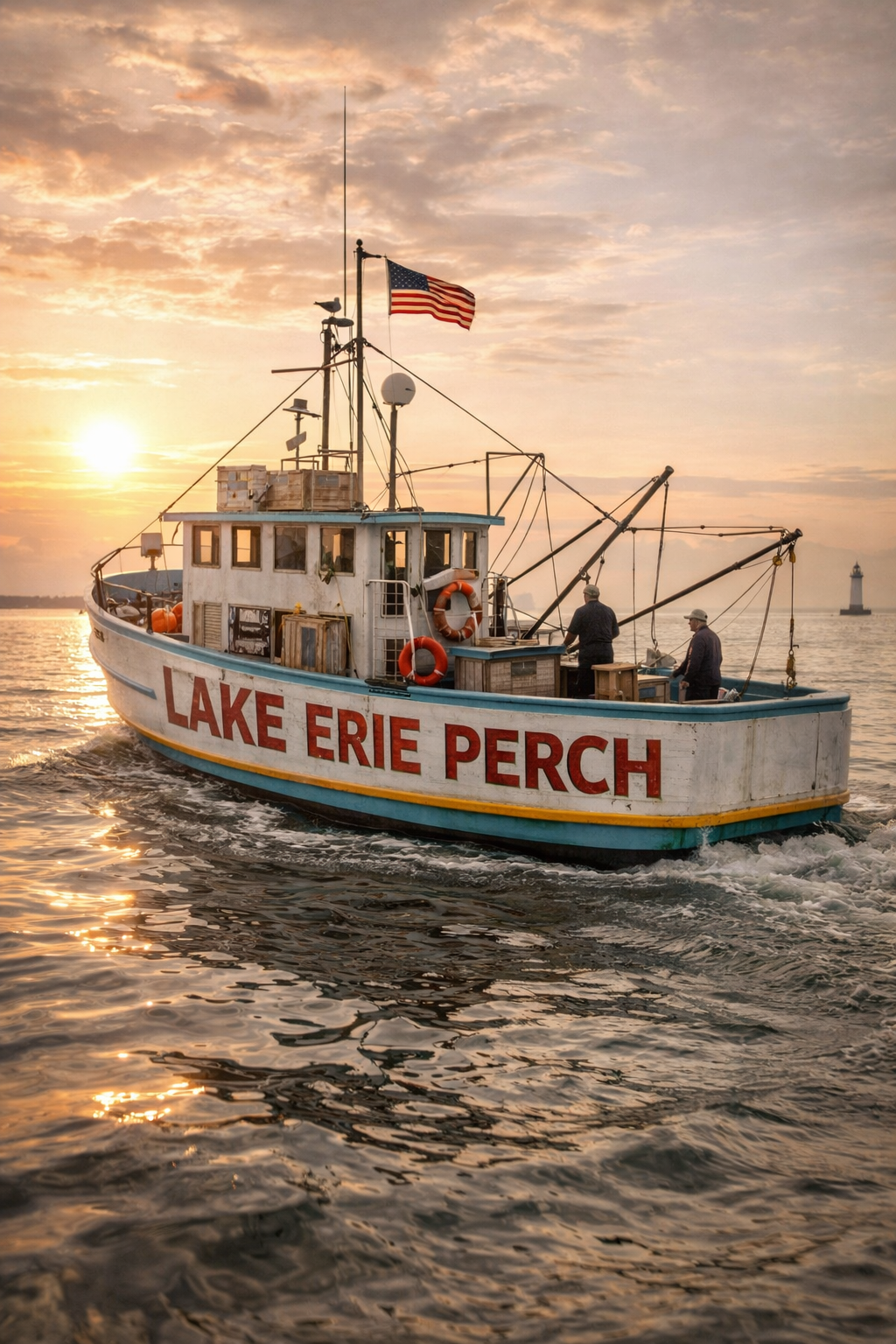
While walleye gets the glory, perch gets the repeat business. It’s naturally sweet and mild, with a delicate flake that cooks fast. That fast cook is the entire challenge—and the entire reason this recipe works.
- Thin fillets: Perch cooks in minutes. The breading must crisp quickly without burning.
- Clean flavor: The fish doesn’t need heavy spice; it needs crisp texture and a squeeze of lemon.
- North Coast coating: Cracker meal (fine crushed saltines) gives a light, classic fish-fry crunch.
If you’ve ever eaten perch at a VFW, a church fish fry, or a lakeside joint with picnic tables, you’ve tasted this style. This is that plate—just made at home.
The North Coast Rules (Read This Before You Fry)
Perch is unforgiving in a very Ohio way. It doesn’t care how good your sauce is. It doesn’t care if your crumbs are seasoned. It cares about three things: dryness, oil temperature, and not steaming the crust. Follow these rules and you can almost’t mess it up.
🛠️ The Equipment Locker
Perch fillets are delicate. Thick spatulas break the fish and knock off breading. A thin, flexible fish spatula slides under cleanly so the crust stays intact.
The Official Roster
The Catch
- 2 lbs yellow perch fillets
- Neutral oil (canola or peanut), for frying
- Lemon wedges & tartar sauce (for serving)
The Dredge Station
- 1 cup all-purpose flour
- 1 tsp kosher salt (divided)
- ½ tsp black pepper
- ½ tsp paprika (optional)
- ¼ tsp garlic powder (optional)
- 2 large eggs + 2 tbsp milk/water
- 2 cups cracker meal (fine crushed saltines)
The Game Plan (Instructions)
- Dry the Fish Like You Mean It: Rinse fillets briefly and pat completely dry with paper towels. If you have time, let them air-dry on a rack for 5 minutes—this makes breading stick even better.
- Build the Breading Station: Bowl 1: flour + ¾ tsp salt + pepper + paprika/garlic (optional). Bowl 2: eggs beaten with milk/water. Bowl 3: cracker meal.
- Heat the Oil to 375°F: Use a heavy skillet or pot. You want 2–3 inches of oil so the fillets can fry evenly. Keep heat steady.
- Bread in Order: Flour (shake off excess) → egg → cracker meal. Press gently so crumbs adhere. Don’t over-pack; perch needs a light coat.
- Fry in Batches: Fry 2–3 minutes per side until golden. Don’t crowd the pan—crowding drops the temperature and creates soggy breading.
- Drain on a Rack: Move fish to a wire rack set over a tray. While hot, sprinkle with the remaining ¼ tsp salt (or to taste).
- Serve Immediately: Perch is best within minutes. Plate with lemon wedges, tartar sauce, coleslaw, and fries for the full North Coast lineup.
Best Sides for a True Ohio Fish Fry Plate
A perch fry isn’t just fish. It’s a whole little ecosystem of sides that show up again and again across Northern Ohio. If you want the full effect, pick two or three and build the plate.
- Classic fries: Crinkle, shoestring, or thick-cut—anything that holds tartar sauce.
- Creamy coleslaw: Cold, crunchy, and slightly sweet to balance fried food.
- Mac & cheese: A church-basement staple that never misses.
- Rye bread: Old-school fish fry energy. Butter it. Don’t overthink it.
- Applesauce: Sounds random until you try it. It works.
The Buckeye Audible
The Port Clinton Stack: Put 2–3 fried fillets on a soft bun with American cheese, shredded lettuce, and tartar sauce. Add pickles if you’re bold. It’s messy, fast, and absolutely correct near the lake.
Wrap the sandwich in paper. Serve with fries and a lemon wedge. Bring napkins. No fancy plating required.
Pro-Tips & Audibles
Pro-Tip: The Curl Test
Perch curls when it’s done. A slight curl plus a golden crust is your exit sign. If the fillet tightens into a stiff tube, it’s overcooked and the sweetness fades.
Pro-Tip: Keep Cracker Meal Fine
Texture matters. Fine crumbs create an even crust that sticks. Big jagged crumbs create weak spots that fall off in the fryer. Crush saltines until they look like coarse sand.
Pro-Tip: Don’t Salt Too Early
Salt after frying. If you heavily salt the fish and let it sit, it can pull moisture to the surface—which works against crispy breading. Season the flour, then finish with a light sprinkle while hot.
The Buckeye Audible: Lemon Pepper Finish
Modern twist: Mix a pinch of lemon pepper seasoning into your salt, then dust the perch right when it comes out of the oil. It’s not “old school,” but it plays well in today’s offense.
Common Mistakes (Penalties 🚩)
- Oil isn’t hot enough: soggy breading and greasy fish.
- Crowding the pan: temperature drops and coating slides off.
- Wet fillets: moisture prevents adhesion and crisping.
- Draining on paper towels: trapped steam softens the crust.
- Overcooking: perch dries out fast—pull it at golden.
Final Whistle
Lake Erie yellow perch is the North Coast’s most reliable comfort food: quick, crisp, and sweet. Keep the coating light, keep the oil hot, and serve it immediately. If you do that, you’ll understand why Northern Ohio has treated the fish fry like a weekly holiday for generations.
Frequently Asked Questions
Should I remove the skin?
It’s optional. Many Ohio fish frys leave skin on for flavor, but if you dislike the texture, remove it before breading. If you keep it on, make sure it’s clean and scaled.
Why is my perch soggy?
Three usual suspects: oil below 375°F, fish that wasn’t dried fully, or a crowded pan. Fix those and the crust improves immediately.
What is cracker meal?
Cracker meal is finely crushed saltine crackers used as breading. It’s lighter than breadcrumbs and crisps quickly—perfect for delicate fish.
Can I bake or air fry perch?
You can, but it won’t be identical. For air frying, spray breaded fillets generously with oil and cook at 400°F for about 8–10 minutes, flipping once. For baking, use a preheated 425°F sheet pan with oil.
How do I keep batches warm?
Place fried perch on a rack over a sheet pan in a 200°F oven while you finish the rest. Avoid covering with foil (steam softens the crust).